
Peter Michael Winery proves that Databricks is for everyone
Peter Michael Winery
Peter Michael Winery (PMW) worked with Computomic on Databricks to connect decades of customer history with personalized allocations, member insight, and decisions during live sales offers.
Its case demonstrates how a specialist luxury business can apply data and AI to critical commercial decisions.
PMW maintained sales with 50% fewer bottles allocated. For a limited-production winery, this points to a more effective allocation process and a stronger connection between what members are offered and what they buy.
Protecting a relationship-driven business
Founded in 1982 in Sonoma County’s Knights Valley, PMW produces acclaimed, limited-production wines. Its family’s 100×100 vision – 100% family ownership for 100 years – places long-term stewardship and customer relationships at the center of the business.
The direct-to-consumer membership model makes allocation a critical commercial decision: which wines to offer, in what quantities, and to whom. Evolving consumer preferences and pressure on wine demand raised the value of timely insight. Members still expected the personal attention and simple purchasing experience associated with a luxury brand.
Where fragmented data limited performance
Forty years of customer and transaction history sat across specialized systems. Disconnected profiles obscured the member journey, while spreadsheets and manual reporting slowed segmentation, allocation planning, and decisions during active offers.
Teams had limited ability to translate historical preferences into individual offers or coordinate outreach with inventory. PMW selected Computomic, a specialist Databricks Gold Partner, to modernize these processes while preserving its high-touch experience.
How the operating model changed
Computomic centered the transformation on a shared customer intelligence foundation. Databricks consolidated customer, transaction, membership, and offer data; connected historical insight with the new CRM; and established common definitions for sales, inventory, allocations, and engagement.
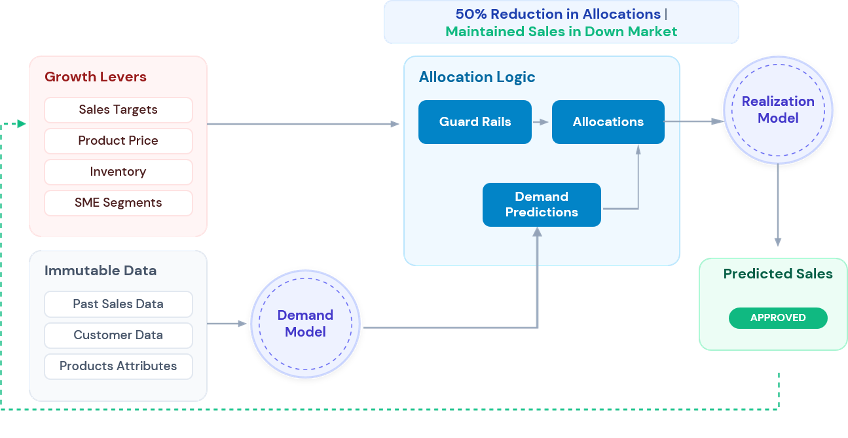
Personalized allocations and member engagement
Individualized allocation models recommend wines and quantities aligned with purchase history and preferences. Behavioral segmentation helps teams distinguish member needs and tailor communications. Membership health views reveal engagement, purchasing, and generational trends, giving relationship teams a fuller picture of their customer base.
The commercial logic is direct: better knowledge of each member supports more relevant offers and outreach. Wish-list granting brings additional member demand into the allocation process. Together, these capabilities support participation, allocation conversion, and stronger relationships without making the experience impersonal.
Decisions while the offer is live
Live offer dashboards replace disconnected spreadsheet reporting with a centralized view of campaign activity, SKU demand and member behavior. Teams can monitor performance, adjust outreach, and revisit allocations while customers are still engaged. Executive views connect revenue results, active releases, and customer segments.
Genie and AI/BI add contextual questions and conversational access to trusted insight. The practical change is a shorter path from seeing a sales signal to acting on it, with sales, allocation, and member relations working from shared information.
The unified view compares release demand and customer segments in one place. Filters and the Ask Genie entry point help teams investigate performance and decide where to focus member outreach.
The governed data foundation
The implementation approach combines Delta Lake and Lakeflow for data integration, Unity Catalog for governance, Databricks SQL and AI/BI for analytics, and machine learning with MLflow for allocation models. Data quality, validation, lineage, and security underpin the shared foundation. The business value comes from embedding these capabilities in revenue processes rather than treating them as a separate technology exercise.
Results and implications for leaders
PMW’s reported outcome, maintained sales with 50% fewer bottles allocated, shows the value of more selective offers. For a limited-production winery, allocation precision is a meaningful commercial lever.
The broader operating benefits PMW described are a unified member view, personalized allocations, live sales visibility, and better-informed outreach. These results support the winery’s business goals of higher participation, revenue per member, and inventory sell-through.
What other businesses can apply
Start with a consequential decision. PMW focused on allocation and member engagement, where customer relevance and limited inventory directly affect commercial performance. Build trusted data before scaling AI, and give business teams shared definitions they can use confidently.
Put insight inside the working day. A dashboard matters when it helps a team respond during an active offer. Track allocation conversion, member participation, revenue per member, and time to act alongside sales. This measurement discipline helps distinguish better decisions from simply greater technology adoption.
The next phase
PMW’s roadmap extends the governed foundation across departments. Planned enhancements include Customer 360 profiles, campaign agents for audiences and next-best actions, broader Genie access, governed agents for allocation and service, and AI search across tasting notes and product knowledge. These are future enhancements, separate from the reported result.
The strategic lesson is that a small business can use advanced data and AI to strengthen the personal service that differentiates it. PMW’s case shows how a shared foundation can turn a long customer history into more relevant offers and timely commercial action.